

The 5 Best Bushnell Scopes For 223 is a versatile rifle cartridge widely used for recreational target shooting, varmint control where lawful, and other sporting applications. Its relatively manageable recoil and availability of different ammunition loads make it suitable for a range of shooting activities. To get the most out of a .223 rifle, choosing a riflescope that offers clear optics, dependable adjustments, and appropriate magnification is important. Bushnell offers several riflescope options worth considering, from compact low-power optics to higher-magnification models designed for more precise aiming.
When shopping for the 5 Best Bushnell Scopes For 223, consider how you intend to use your rifle. A low-magnification scope can be convenient for shooting at shorter distances and acquiring targets quickly, while a variable-power scope with greater magnification can help when examining smaller targets at longer distances.
Bushnell’s AR Optics and general-purpose riflescope lines offer different features for shooters with varying priorities. Some models have reticles designed around particular .223 Remington or 5.56 NATO ammunition specifications, while others use conventional reticles suited to a wider range of applications.
In this guide, we examine 5 Best Bushnell Scopes For 223 options, their principal features, advantages, limitations, and the factors to consider before purchasing. Always verify the exact model designation and availability because product configurations and retail stock can change.
5 Best Bushnell Scopes For 223
1. Bushnell AR Optics 1-4x24mm Drop Zone-223

The Bushnell AR Optics 1-4x24mm Drop Zone-223 is a compact riflescope worth considering for shooters who want a simple optic with a wide magnification range for general-purpose shooting. Its 1x setting provides a relatively broad field of view, while the 4x setting offers additional magnification when closer examination of a target is useful. This configuration is particularly suited to AR-style rifles chambered in .223 Remington or 5.56 NATO.
One of its main attractions is the Drop Zone-223 reticle. This reticle provides aiming references intended for specified .223 and 5.56 ammunition configurations. However, the actual relationship between the reticle marks and bullet impact depends on the ammunition, barrel characteristics, sight-in distance, and environmental conditions. Shooters should verify their particular setup rather than assuming every holdover reference will correspond to an exact distance.
The 24mm objective lens helps keep the overall package compact. This can be advantageous for shooters who want to avoid adding unnecessary bulk to their rifles. Although a 24mm objective does not gather as much light as some larger objective lenses under comparable conditions, the scope’s lower magnification range can still provide a practical viewing experience in suitable daylight conditions.
The scope’s variable magnification also offers flexibility for recreational target shooting. At 1x, the view is less magnified and easier to scan, while the 4x setting helps distinguish smaller target details. It is important to note that this is not a substitute for a higher-magnification optic when the primary objective is inspecting small targets at extended distances.
Features
-
Magnification range of 1–4x
-
24mm objective lens
-
Drop Zone-223 reticle
-
Compact optical configuration
-
Second focal plane design
Pros
-
Compact and practical design
-
Low starting magnification
-
Reticle designed for specified .223 and 5.56 loads
Cons
-
Limited maximum magnification
2. Bushnell AR Optics 3-9x40mm Drop Zone-223
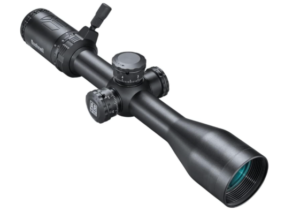
The Bushnell AR Optics 3-9x40mm Drop Zone-223 is a versatile option for shooters looking for a balance between moderate magnification and a reasonably sized objective lens. Its 3–9x magnification range can accommodate different target sizes and viewing distances. This makes it a useful configuration to consider for recreational shooting and other lawful sporting applications.
The 40mm objective lens offers a larger light-entry aperture than the 24mm lens found on the 1-4x24mm model. Actual brightness still depends on glass quality, lens coatings, magnification, and lighting conditions. Nevertheless, the 40mm format is a popular compromise for shooters who want useful optical performance without moving to a particularly large objective lens.
The Drop Zone-223 reticle is another important consideration. Its aiming references are designed around specified .223 Remington and 5.56 NATO ammunition characteristics. These references may help users understand the relationship between their primary aiming point and other points in the reticle, but the correct correspondence must be established with the ammunition and setup being used.
Compared with a low-power optic, the 3–9x configuration provides more flexibility when viewing small targets. The 3x setting offers a moderately wide field of view, while the 9x setting makes target details appear larger. Increasing magnification also narrows the field of view, so the best setting depends on the target, available light, and the user’s viewing requirements.
Features
-
Magnification range of 3–9x
-
40mm objective lens
-
Drop Zone-223 reticle
-
Second focal plane design
-
General-purpose variable magnification
Pros
-
Versatile magnification range
-
Larger objective lens than the 1-4x24mm model
-
Cartridge-oriented reticle
Cons
-
Older configurations may be harder to find
3. Bushnell AR Optics 4.5-18x40mm Drop Zone-223
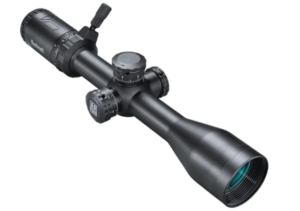
The Bushnell AR Optics 4.5-18x40mm Drop Zone-223 is designed for users who value greater magnification when examining smaller targets. Its 4.5–18x range provides substantially more magnification than the previous two options. This makes it worth considering for precision-oriented recreational target shooting where a detailed view of the target is a priority.
Its 40mm objective lens keeps the design relatively moderate compared with scopes featuring larger 50mm or 56mm objectives. At higher magnification, however, the exit pupil becomes smaller, and the image may appear dimmer under poor lighting. Proper eye positioning and adequate lighting become increasingly important when using the upper end of the magnification range.
The Drop Zone-223 reticle distinguishes this configuration from scopes with a conventional crosshair. Its aiming references are intended for specified .223 Remington and 5.56 NATO ammunition characteristics. Because trajectories vary between ammunition loads, users should confirm the actual point of impact at known distances rather than relying solely on the reticle’s markings.
One advantage of the higher magnification range is the ability to see more target detail when conditions allow. The 4.5x setting provides a useful starting point for moderate-distance viewing, while 18x can help inspect smaller aiming areas. The narrower field of view at high magnification makes this configuration less convenient for rapidly scanning broad areas or tracking moving targets.
Features
-
Magnification range of 4.5–18x
-
40mm objective lens
-
Drop Zone-223 reticle
-
Second focal plane design
-
Side parallax adjustment on documented versions
Pros
-
High maximum magnification
-
Useful for examining small targets
-
Reticle designed around specified .223 and 5.56 loads
Cons
- Narrower field of view at high magnification
4. Bushnell R3 4-12x40mm Riflescope
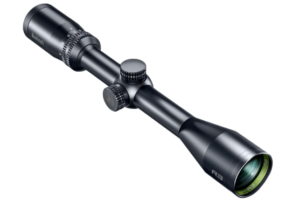
The Bushnell R3 4-12x40mm riflescope is a general-purpose optic that can be considered for a .223 rifle when a conventional hunting-style scope is preferred. Its 4–12x magnification range offers more upper-end magnification than a standard 3–9x scope. The configuration is designed for users who want to examine targets at different distances without moving to a particularly large or heavy optic.
Bushnell describes the R3 series as a hunting-oriented line with fully multi-coated optics and EXO Barrier lens protection. The protective coating is intended to help repel water, oil, dust, and debris from the exterior lens surfaces. The 4-12x40mm version also features a one-inch tube and a waterproof construction rating specified by the manufacturer.
Reticle selection is especially important when choosing this model. Bushnell lists the R3 4-12x40mm with a DOA Quick Ballistic reticle, as well as other configurations. The DOA reticle provides ballistic aiming references, but it should not be confused with the AR Optics Drop Zone-223 reticle. A general-purpose reticle may work well for a .223 rifle, but any ballistic references must be checked against the actual ammunition and sight-in setup.
The 40mm objective lens is a practical size for a hunting-style scope. The variable magnification allows the user to select a lower setting for a wider field of view or a higher setting for a closer look at the target. The trade-off is that 4x is the minimum magnification, making it less suitable for applications that benefit from a true 1x view.
Features
-
Magnification range of 4–12x
-
40mm objective lens
-
Fully multi-coated optics
-
EXO Barrier lens protection
-
One-inch tube
-
Capped adjustment turrets on the documented version
Pros
-
Useful magnification for varied target sizes
-
Protective lens coating
-
Waterproof construction
-
General-purpose hunting design
Cons
-
Reticle variants can be confusing
5. Bushnell R5 4-12x40mm Riflescope

The Bushnell R5 4-12x40mm riflescope is another option for shooters who want a general-purpose optic with moderate-to-high magnification. The R5 series includes several configurations, so it is important to check the exact model rather than assuming every R5 scope has identical specifications. Bushnell lists the R5 4-12x40mm in its R-Series collection.
Its 4–12x magnification range provides flexibility for inspecting targets at different distances. At the lower setting, the user gets a wider field of view than at 12x. At the upper setting, smaller target details appear larger, although image brightness and the field of view may decrease. For a .223 rifle, this can be a sensible range for users who do not need the low-power capabilities of a 1-4x scope or the higher magnification of an 18x model.
Reticle configuration is a key consideration when comparing the R5 with the AR Optics line. R5 variants can feature different reticles, including hunting-oriented ballistic designs. The reticle should be chosen according to the user’s intended application and familiarity with its aiming references. A ballistic reticle does not eliminate the need to establish a reliable zero and verify performance with the selected ammunition.
For general sporting use, the 40mm objective lens provides a middle ground between compact dimensions and light transmission. The suitability of the scope also depends on its mounting compatibility, eye relief, adjustment range, and the weight the shooter is willing to carry. Buyers should review the specification sheet for the precise R5 variant and ensure that the chosen mounting rings match the scope tube diameter.
Features
-
Magnification range of 4–12x
-
40mm objective lens
-
Multiple reticle configurations across the R5 range
-
General-purpose riflescope design
-
Model-specific adjustment and eye-relief specifications
Pros
-
Versatile magnification range
-
Suitable for general sporting applications
-
Different configurations to compare
-
Worth considering alongside the R3 series
Cons
- Exact features depend on the selected variant
Related Articles:
Factors to Consider When Choosing the 5 Best Bushnell Scopes For 223
Magnification
Magnification should be one of the first specifications you consider. A 1-4x scope emphasizes a wide field of view and lower magnification, while a 3-9x or 4-12x scope provides more flexibility for viewing smaller targets. An 18x maximum setting may be useful for detailed target observation but is less convenient for rapidly scanning an area.
Objective lens
The objective lens influences how much light can enter the optical system. A 40mm objective is a common compromise between size and viewing performance, while a 24mm objective supports a more compact design. Larger objectives do not automatically mean better image quality, since lens quality, coatings, magnification, and lighting conditions also matter.
Reticle design
Choose a reticle that suits your familiarity and intended use. A conventional crosshair is simple to understand, while a ballistic reticle offers additional aiming references. For the Drop Zone-223 models, verify that the reticle’s assumptions are appropriate for your ammunition. Do not assume that a reticle designed for .22 LR, .308 Winchester, or another cartridge will match .223 Remington.
Optical clarity
Clear optics help you distinguish the target from its surroundings. Fully multi-coated lenses can improve light transmission and reduce unwanted reflections. Protective coatings such as Bushnell’s EXO Barrier are designed to help keep exterior lens surfaces clearer when exposed to water, dust, or oil.
Eye relief
Eye relief affects how comfortably you can position your eye behind the scope. Before purchasing, check the manufacturer’s eye-relief specification, tube diameter, and mounting requirements. Use compatible mounting hardware and follow the scope and rifle manufacturers’ instructions.
Durability
If you intend to use your rifle outdoors, consider waterproofing, fog resistance, construction quality, and the manufacturer’s durability testing. A scope should remain securely mounted and maintain its zero under the conditions for which it is rated. Check the warranty terms and exclusions before buying.
FAQs about the 5 Best Bushnell Scopes For 223
1. What is the best Bushnell scope for a .223 Remington rifle?
The Bushnell AR Optics 3-9x40mm Drop Zone-223 is a reasonable all-round candidate because it combines a versatile magnification range with a reticle designed around specified .223 and 5.56 ammunition. The 1-4x24mm model is worth considering if compactness and a wider field of view are more important, while the 4.5-18x40mm model offers greater magnification.
2. Is a 3-9x40mm scope good for .223 Remington?
Yes. A 3-9x40mm scope offers a useful balance of magnification and objective lens size for many general sporting and target-shooting applications. Whether it is the right choice depends on the target size, viewing distance, lighting conditions, and the user’s preferences.
3. Is the Drop Zone-223 reticle suitable for every .223 load?
No. Its ballistic references are based on particular ammunition and sighting assumptions. Bullet weight, muzzle velocity, sight-in distance, and environmental conditions can affect the relationship between reticle marks and actual bullet impact. Verify the setup with the ammunition you use.
4. Is a 4-12x40mm scope better than a 3-9x40mm scope?
Not necessarily. A 4-12x40mm scope provides more maximum magnification, which can be useful when examining smaller targets. A 3-9x40mm scope starts at a lower magnification and may offer a wider field of view at its minimum setting. The better option depends on the intended application.
Conclusion
The best Bushnell scope for .223 Remington depends on how you plan to use your rifle. Before making your final choice, prioritize the appropriate magnification range, reticle, optical clarity, eye relief, and mounting compatibility. Confirm the exact model and reticle configuration, particularly when shopping for older AR Optics models. A well-matched scope should meet your intended needs without paying for features you will rarely use.