

Choosing the 5 Best Burris Scopes For Long Range Shooting requires careful consideration of magnification, optical clarity, reticle design, adjustment precision, and durability. A quality riflescope should provide a clear sight picture, reliable elevation and windage adjustments, and comfortable eye relief. Whether you spend your time at a shooting range or hunt in open terrain, the right optic can help you maintain a consistent aiming point and make precise adjustments at different distances.
The 5 Best Burris Scopes For Long Range Shooting, recreational shooting, and precision applications. Its XTR series is designed for demanding precision work, while the Veracity family focuses on hunting performance and practical aiming features.
In this guide, we explore 5 Best Burris Scopes For Long Range Shooting worth considering for long-range shooting.
5 Best Burris Scopes For Long Range Shooting
1. Burris XTR III 5.5-30×56

The Burris XTR III 5.5-30×56 is a premium riflescope designed for precision shooting and demanding long-range applications. Its 5.5-30x magnification range allows shooters to examine distant targets in greater detail. The 56 mm objective lens supports light collection, while the high maximum magnification is useful when a more detailed view of smaller targets is needed. It is particularly suited to dedicated precision rifles and stationary range setups.
One of its main advantages is the first focal plane reticle. Reticle subtensions remain proportional to the target as magnification changes, allowing shooters to use the reticle markings for elevation and windage holds at different power settings. Depending on the configuration, reticle options include SCR MOA and SCR 2 MIL. Choosing the appropriate measurement system can make corrections easier to calculate and apply consistently.
The scope uses a 34 mm main tube and offers a substantial internal adjustment range. Applicable configurations provide approximately 90 MOA or 26 MIL of total elevation adjustment. This gives shooters flexibility when dialing elevation corrections, although the usable range depends on the mounting system and zero position. The Zero Click Stop mechanism also helps return the elevation turret to the established zero after adjustments.
Adjustable parallax helps refine the target image and reduce apparent reticle movement caused by changes in eye position. This feature is especially useful when working at high magnification, where alignment errors can become more noticeable. Certain versions also provide reticle illumination, which can improve reticle visibility against dark or complicated backgrounds. Shooters should verify the precise specifications of their chosen configuration before purchasing.
Features
-
Magnification is 5.5-30x
-
Objective lens is 56 mm
-
Main tube is 34 mm
-
First focal plane
-
Approximately 90 MOA or 26 MIL on applicable versions
-
Zero Click Stop system
-
Adjustable parallax
Pros
-
High maximum magnification
-
First focal plane reticle
-
Generous elevation adjustment
-
Convenient return-to-zero reference
-
Designed for precision shooting
Cons
-
Relatively heavy
2. Burris XTR III 3.3-18×50
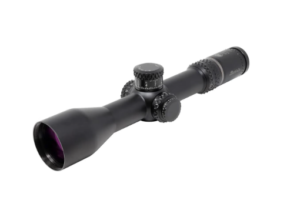
The Burris XTR III 3.3-18×50 is a versatile alternative for shooters who want precision-oriented features with a wider field of view at lower magnification. Its 3.3-18x range allows it to handle a variety of target distances without the very high maximum power of the 5.5-30×56 model. The 50 mm objective lens provides a practical balance between light collection and overall scope dimensions.
The first focal plane reticle is one of its most useful features. Reticle measurements remain proportional to the target across the magnification range, making it possible to use reticle-based holds at different power settings. Depending on the configuration, available reticles include SCR MOA and SCR 2 MIL. These options allow shooters to select the measurement system that best suits their established shooting methods.
Another advantage is its elevation adjustment capability. Applicable configurations provide approximately 120 MOA or 35 MIL of total elevation travel. This can offer useful flexibility for dialing elevation corrections at different distances. The 34 mm main tube and adjustable parallax further support its precision-oriented design. As with any riflescope, the actual adjustment available after zeroing depends on the rifle and mounting arrangement.
The lower starting magnification makes the XTR III 3.3-18×50 particularly versatile. A wider field of view can help shooters locate targets more easily before increasing magnification for a more detailed sight picture. This is helpful for range sessions involving targets at different distances and for some field applications where the shooter needs more flexibility than a high-magnification optic provides.
Features
-
Magnification is 3.3-18x
-
Objective lens is 50 mm
-
Main tube is 34 mm
-
First focal plane
-
Adjustable parallax
-
Zero-stop functionality on applicable configurations
Pros
-
Versatile magnification range
-
Wider field of view at low power
-
First focal plane reticle
-
Extensive elevation adjustment
-
Suitable for varied shooting applications
Cons
-
Advanced features may be unnecessary for casual shooters
3. Burris Veracity PH 4-20×50
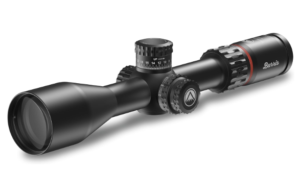
The Burris Veracity PH 4-20×50 is a hunting-oriented riflescope that combines traditional optics with electronic ballistic assistance. Its 4-20x magnification range provides flexibility for viewing targets at different distances, while the 50 mm objective lens offers a practical balance between light collection and scope size. It is especially interesting to hunters who want additional ballistic information integrated into their optics.
The most distinctive feature is the Programmable Elevation Knob, known as PĒK. This system works with compatible ballistic profiles to help the shooter select an elevation setting for a particular distance. An electronic heads-up display presents relevant shooting information, reducing the need to consult a separate device while preparing for a shot. The usefulness of this system depends on the scope’s configuration and correct ballistic inputs.
The Veracity PH uses a first focal plane reticle on the documented 4-20×50 configurations. This allows the reticle’s subtensions to remain proportional to the target as magnification changes. Side-focus parallax adjustment helps refine the target image, while the Zero Turn Stop system provides a reference for returning to the established zero after elevation adjustments. These features combine conventional scope controls with electronic assistance.
The scope can be configured through the BurrisConnect application, which allows users to enter ballistic information for their rifle and ammunition. Correct configuration is important because inaccurate inputs can lead to unsuitable aiming references. Shooters should verify their setup and understand the limitations of electronic ballistic systems rather than relying on digital information without validation.
Features
-
Magnification is 4-20x
-
Objective lens is 50 mm
-
Main tube is 30 mm
-
First focal plane on documented configurations
-
Programmable Elevation Knob
-
Electronic heads-up display
-
Side-focus parallax adjustment
Pros
-
Integrated ballistic assistance
-
First focal plane reticle
-
Convenient digital aiming information
-
Adjustable parallax
-
Combines optical and electronic features
Cons
-
Ballistic settings must be configured correctly
4. Burris Veracity 5-25×50
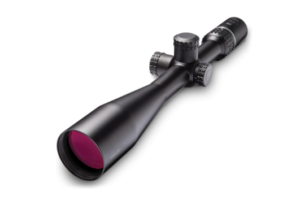
The Burris Veracity family is designed primarily for hunting and includes riflescopes with features intended to support accurate aiming in the field. A scope advertised as the Veracity 5-25×50 would provide a high maximum magnification that could be useful for viewing distant targets. However, the exact 5-25×50 designation should be verified before purchase because product specifications can vary across Veracity generations and configurations.
Higher magnification can help shooters distinguish smaller target details when conditions are favorable. A 25x maximum power may be useful for carefully aiming at distant targets from a stable position. However, magnification alone does not guarantee accuracy. Mirage, wind, image stability, target contrast, and shooting technique can all affect performance at extended distances.
The 50 mm objective lens can offer a useful balance between light collection and overall scope dimensions. Image brightness also depends on magnification, glass quality, lens coatings, and available light. Buyers should consider optical clarity, edge performance, eye relief, and the scope’s overall construction rather than assuming that a larger objective lens automatically provides a superior image.
Reticle design and adjustment controls are especially important when evaluating a scope for long-range use. Depending on the exact Veracity version, reticle placement and turret features may differ from those of the precision-focused XTR III family. Before purchasing, check whether the reticle is first or second focal plane, confirm the elevation adjustment range, and ensure that the reticle and turret units match your preferred measurement system.
Features
-
Objective lens Confirm the model specification
-
Check focal plane and reticle type
-
Verify adjustment increments
-
Hunting and recreational shooting, depending on configuration
Pros
-
Veracity family includes hunting-oriented optics
-
High magnification may benefit distant target viewing
-
Potentially useful for hunting and range applications
-
Worth comparing when shopping for used scopes
Cons
-
Used models may have limited warranty support
5. Burris Fullfield E1 4.5-14×42

The Burris Fullfield E1 4.5-14×42 is a practical option for shooters who want a straightforward riflescope for hunting and recreational range use. Its 4.5-14x magnification range offers useful flexibility for moderate-distance shooting and selected longer-distance applications. Although it lacks the maximum magnification of the XTR III models, it may be suitable for buyers who prioritize simplicity and affordability.
The 42 mm objective lens helps keep the scope relatively manageable for field use. Compared with larger precision optics, this configuration can be easier to carry on a hunting rifle. Image quality depends on optical construction, coatings, magnification, and lighting conditions, so objective diameter should not be the only factor used to judge performance.
Fullfield E1 models use hunting-oriented reticle designs intended to support practical aiming and trajectory compensation. The exact reticle depends on the version, so buyers should verify the manufacturer’s specifications before purchasing. Reticle markings can help with holdovers, but their relationship to a particular rifle and ammunition setup should be checked before they are used for precise corrections.
The principal limitation for dedicated long-range shooting is its maximum magnification of 14x. That may be adequate for many hunting situations, but shooters who regularly work with small targets at extended distances may benefit from higher magnification and a more extensive elevation adjustment range. The Fullfield E1 is best considered for general hunting and recreational use rather than specialized precision competition.
Features
-
Magnification is 4.5-14x
-
Objective lens is 42 mm
-
Hunting and recreational shooting
Pros
-
Practical magnification for general hunting
-
Relatively manageable size
-
Straightforward operation
-
Suitable for recreational range use
-
Potentially more affordable than premium precision scopes
Cons
- Limited maximum magnification
Related Articles:
Factors to Consider When Choosing the 5 Best Burris Scopes For Long Range Shooting
Magnification
Magnification affects how clearly you can see distant targets. Higher magnification can help when aiming at small targets, while lower magnification provides a wider field of view and can make it easier to locate a target. Consider your typical shooting distances and target sizes before choosing between an 18x, 25x, or 30x maximum magnification.
Reticle
MOA and MIL are two common measurement systems used for angular corrections. Choose a scope whose reticle and turret units match so you can make adjustments without unnecessary conversions. Also consider whether you prefer dialing corrections with the turrets or using reticle-based holds.
Optical Clarity
Clear optics help you distinguish target details and maintain a useful sight picture. Consider glass quality, lens coatings, contrast, eye relief, and performance in different lighting conditions. A large objective lens can help increase the exit pupil at a given magnification, but it does not guarantee better optical quality.
Parallax Adjustment
Parallax adjustment helps refine the target image and reduce apparent reticle movement when your eye position changes. It is particularly useful when shooting at different distances or using higher magnification. Check the scope’s parallax adjustment range and minimum focus distance before purchasing.
Weight
Premium precision scopes can add significant weight to a rifle. This may be acceptable for a dedicated range rifle but less desirable for hunting on foot. Confirm the tube diameter, mounting-ring compatibility, eye relief, and overall dimensions before buying mounting hardware.
Durability
Look for solid construction, appropriate weather resistance, and recoil suitability for your rifle. If purchasing a discontinued or used scope, inspect the lenses, turrets, reticle illumination, and general condition.
FAQs about the 5 Best Burris Scopes For Long Range Shooting
Which Burris scope is best for long-range shooting?
The Burris XTR III 5.5-30×56 is a strong candidate for dedicated precision shooting because of its high magnification, first focal plane reticle, and substantial elevation adjustment. The XTR III 3.3-18×50 is another option for shooters who want a wider field of view at lower magnification.
Is the Burris Veracity PH suitable for long-range hunting?
Yes. The Veracity PH 4-20×50 combines traditional optics with electronic ballistic assistance. Its Programmable Elevation Knob and heads-up display can provide distance-based aiming information when the system is configured correctly. Verify availability and warranty support before purchasing.
Do I need a 30x scope for long-range shooting?
No. A 30x scope can be helpful for examining small targets at extended distances, but lower maximum magnification can be sufficient for many applications. Target size, mirage, lighting, image stability, and optical quality all influence how much magnification is useful.
Conclusion
The best Burris scope for long-range shooting depends on your intended application, preferred magnification, and budget.
Before purchasing, verify the specifications and availability of the exact model, especially if it has been discontinued. Pay close attention to optical clarity, reticle design, elevation adjustment, and compatibility with your rifle. Selecting a scope that matches your actual needs will help you get better value from your investment than choosing one based on magnification alone.