
You are at the right place if you are looking for the 7 Best Binoculars for Wildlife.
Wildlife observation is one of the best ways to appreciate nature without disturbing animals in their natural environment. Whether you are watching birds from a backyard, observing mammals on safari, exploring a national park, or scanning a distant hillside, a good pair of binoculars can reveal details that are impossible to see clearly with the naked eye. The right optic should bring animals closer while maintaining a natural, bright, and comfortable view.
Choosing binoculars for wildlife is slightly different from choosing them purely for hunting. Wildlife watchers often need to follow moving animals, locate birds quickly, observe behavior, and switch between nearby and distant subjects.
This makes factors such as field of view, focusing speed, image clarity, eye comfort, weight, and low-light performance particularly important. Current binocular guides also emphasize that the ideal model depends on the intended activity, with different configurations suited to wildlife, birdwatching, travel, and general outdoor observation.
The 7 Best Binoculars for Wildlife below provide a range of options for wildlife enthusiasts. They include premium 10×42 models, a larger 10×50 option for additional light-gathering potential, and an 8×42 model that emphasizes a wider viewing experience. Whether you are watching elephants, deer, birds, primates, or other wildlife, these binoculars can provide useful tools for exploring the natural world.
7 Best Binoculars for Wildlife
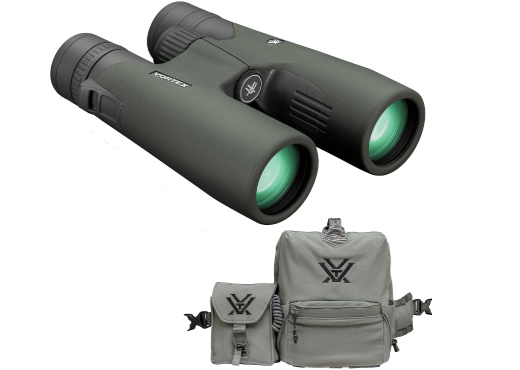
1. Vortex Razor UHD 10×42 Binoculars & GlassPak Pro Harness
The Vortex Razor UHD 10×42 Binoculars & GlassPak Pro Harness is an excellent choice for wildlife enthusiasts who want premium optical performance combined with practical field carrying. Its 10x magnification makes it particularly useful when observing animals that are relatively far away. You can examine distant movement, body features, and behavior without having to approach the animal.
The 42mm objective lenses provide a useful balance between optical capability and portability. Wildlife watching often involves considerable walking, so carrying a huge binocular throughout the day can become tiring. The 10×42 configuration provides plenty of magnification while remaining more practical for general outdoor use than many larger binoculars.
The included GlassPak Pro Harness is another advantage for wildlife observation. Instead of keeping the binoculars inside a bag, the harness allows them to remain close and accessible when an animal suddenly appears. This can be particularly useful on safaris, nature walks, and wildlife excursions where opportunities for observation can disappear quickly.
Vortex’s Razor UHD design includes premium optical features such as an Abbe-Koenig prism and APO optical system, while the manufacturer describes the binocular as waterproof, fogproof, and shockproof.
Features
- 10x magnification
- 42mm objective lenses
- UHD optical system
- Premium prism and optical design
- Rugged outdoor construction
- GlassPak Pro Harness included
Pros
- Excellent image quality
- Great for distant wildlife
- Practical 10×42 configuration
- Convenient carrying system
Cons
- May be excessive for casual observers
2. ZEISS Conquest HDX Binoculars 10×42
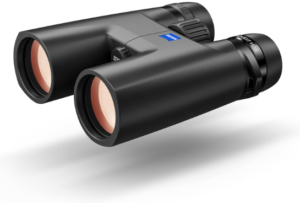
The ZEISS Conquest HDX Binoculars 10×42 is a strong choice for wildlife enthusiasts who place image quality and fine detail above everything else. Observing wildlife is not always about simply seeing an animal; sometimes the goal is to identify markings, study behavior, distinguish different species, or watch subtle movement from a considerable distance.
Its 10x magnification provides useful reach for these situations. The 42mm objective lenses also keep the binocular relatively manageable, making it appropriate for wildlife trips where you may spend hours walking, standing, or traveling between different observation locations.
ZEISS describes the Conquest HDX as using an HD optical concept with ED glass, aspheric lenses, and FieldFlattener technology. The manufacturer also states that the line provides more than 90% light transmission. These characteristics can be particularly valuable when observing wildlife in shaded forests or during the changing light of early morning and evening.
The binocular is also designed for demanding outdoor environments. Its rugged construction and weather protection make it appropriate for nature enthusiasts who do not want to limit their wildlife viewing to dry and comfortable conditions.
Features
- 10x magnification
- 42mm objectives
- HD optical system
- ED glass
- FieldFlattener technology
- High light transmission
- Weather-resistant construction
Pros
- Excellent optical detail
- Strong contrast
- Good for distant wildlife
- Premium construction
Cons
- More than casual users may need
3. Vortex Diamondback HD 10×42 Binoculars
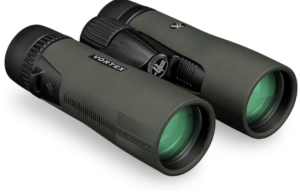
The Vortex Diamondback HD 10×42 Binoculars is a practical option for wildlife enthusiasts who want capable optics without spending as much as they would on premium models. Its 10×42 configuration provides enough magnification to observe distant animals while remaining relatively easy to carry.
For beginners, this binocular can be particularly attractive. Wildlife observation often involves learning how to scan terrain systematically, identify movement, and locate animals against complex backgrounds. A capable 10x binocular can provide a good foundation for developing these skills.
The Diamondback HD is also suitable for travelers. Wildlife enthusiasts may use binoculars on safari, during hiking trips, at nature reserves, or while visiting national parks. Having a reasonably compact and durable binocular means it can accompany you without becoming an excessive burden.
Vortex lists the Diamondback HD 10×42 with a 330-foot field of view at 1,000 yards, 15mm eye relief, and a 21.3-ounce weight.
Features
- 10x magnification
- 42mm objective lenses
- HD optical system
- Roof-prism configuration
- 330-foot field of view at 1,000 yards
- 15mm eye relief
Pros
- Good value
- Versatile 10×42 design
- Manageable weight
- Good choice for beginners
Cons
- Not a flagship optic
4. Athlon Optics 8×42 Talos G2 HD Binoculars
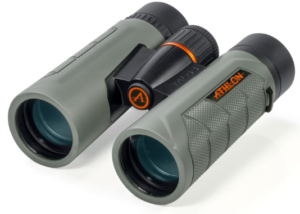
The Athlon Optics 8×42 Talos G2 HD Binoculars is an appealing choice for wildlife observers who prefer a wider viewing experience rather than maximum magnification. Eight-power binoculars can be particularly useful when observing moving animals because the broader view makes it easier to keep subjects within the frame.
The 42mm objective lenses provide a practical balance between light gathering and portability. This makes the Talos G2 HD suitable for nature walks, birdwatching, wildlife parks, and general outdoor observation.
Athlon lists a 7.1-degree angular field of view and 371 feet at 1,000 yards for the 8×42 model. The manufacturer also specifies 17.9mm eye relief and a weight of 20.8 ounces. These characteristics make it an interesting option for users who value broad viewing and manageable carrying weight.
For close-to-medium-distance wildlife observation, the lower magnification can also feel more natural and easier to stabilize by hand. It is therefore a good alternative to the 10x models for observers who prioritize comfort and situational awareness.
Features
- 8x magnification
- 42mm objective lenses
- 7.1-degree angular field of view
- 371-foot field of view at 1,000 yards
- 17.9mm eye relief
- HD glass
- BAK4 prisms
Pros
- Wide viewing experience
- Comfortable 8x magnification
- Lightweight design
- Good value
Cons
- Not ideal for extremely distant subjects
5. Nikon Monarch M5 10×50 Binocular
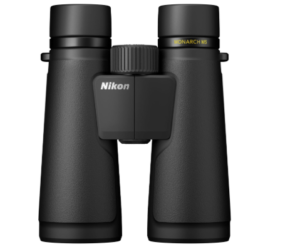
The Nikon Monarch M5 10×50 Binocular is particularly appealing for wildlife observers who frequently watch animals during early morning or evening. These periods can offer some of the most interesting wildlife activity, but the available light is often significantly lower than during the middle of the day.
The 50mm objective lenses distinguish this binocular from most of the 10×42 options on this list. The larger objective format can be useful when you want to gather more available light, although the overall binocular is larger than a typical 42mm model.
The 10x magnification also provides plenty of reach for wildlife observation. You can use it to inspect distant animals without immediately moving closer and potentially disturbing them. This can be especially useful when observing animals that are sensitive to human presence.
Interestingly, Outdoor Life’s 2026 testing named the Nikon Monarch M5 10×50 its Editor’s Choice among its tested binoculars, praising its bright, crisp image, ergonomics, and value.
Features
- 10x magnification
- 50mm objective lenses
- ED glass
- Large objective design
- Tripod-adapter compatible
- Suitable for wildlife and outdoor observation
Pros
- Excellent choice for dawn and dusk
- Large objective lenses
- Strong magnification
- Good image quality
Cons
- Less convenient for long hikes
6. Leupold BX-4 Pro Guide HD Binoculars, 10x42mm Gen 2
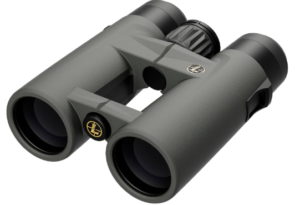
The Leupold BX-4 Pro Guide HD Binoculars, 10x42mm Gen 2 is well suited to wildlife watchers who spend long periods studying animals and their surroundings. Wildlife observation often involves patience—you may need to remain in one position for several minutes or even hours while waiting for animals to become visible.
The 10×42 configuration gives you useful magnification without creating the bulk of a larger objective system. This makes it practical for wildlife walks, safari trips, nature reserves, and general outdoor observation.
Ergonomics are also important when viewing wildlife. Leupold’s design includes an open-bridge configuration, interchangeable eyecups, and a locking center-hinge diopter. Outdoor Life specifically highlighted the model’s ergonomic handling and interchangeable eyecups in its testing.
These features can make a meaningful difference when the binoculars are used repeatedly throughout a long day. Instead of treating them as an optic that is only used occasionally, the BX-4 Pro Guide HD can serve as a dependable observation tool for extended wildlife sessions.
Features
- 10x magnification
- 42mm objective lenses
- HD optical design
- Open-bridge body
- Interchangeable eyecups
- Locking center-hinge diopter
- Tripod-mountable
Pros
- Comfortable for long sessions
- Excellent general-purpose configuration
- Useful ergonomic design
- Strong magnification
Cons
- Not the lightest option
7. Vortex Viper HD Roof Prism Binoculars 10×42
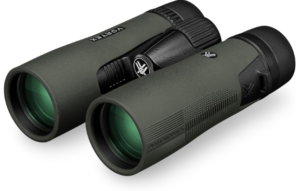
The Vortex Viper HD Roof Prism Binoculars 10×42 is a versatile option for people who want binoculars that can handle many different wildlife-viewing situations. The 10×42 configuration is a popular balance because it provides useful magnification while remaining practical enough for travel and outdoor activities.
Wildlife rarely stays still for long. An animal may appear at a distance, move behind vegetation, and then emerge somewhere else entirely. A 10x binocular can provide enough reach to follow these movements while allowing the observer to study the surrounding environment.
The Viper HD is also useful for people whose interests extend beyond wildlife. The same binocular can be used for birdwatching, hiking, scouting, nature observation, and sporting events. This versatility makes it a good choice if you want one pair of binoculars for several outdoor activities.
A recent 2026 hunting-optics guide also placed the Viper HD 10×42 as a leading overall choice in its category, highlighting its field of view and mid-range positioning.
Features
- 10x magnification
- 42mm objective lenses
- HD optical system
- Roof-prism design
- Durable outdoor construction
- Versatile field configuration
Pros
- Excellent all-purpose choice
- Useful magnification
- Good balance of size and performance
- Suitable for many outdoor activities
Cons
- None sofar
Read Also:
Best Hunting Binoculars for Clear Game Viewing
How to Choose the 7 Best Binoculars for Wildlife
Field of View
Field of view is particularly important for wildlife observation because animals can move quickly and unpredictably. A wider view makes it easier to locate a bird or follow an animal without constantly moving the binoculars. If you frequently observe birds in flight or fast-moving mammals, an 8x model can be especially appealing.
Magnification
Magnification determines how large distant subjects appear. Ten-power binoculars are useful when wildlife is far away, while 8x binoculars can offer a wider and potentially steadier view. Consider these before choosing the 7 Best Binoculars for Wildlife.
Objective Lens
The objective lens affects how much light enters the binocular. A 42mm objective is a versatile choice for daytime wildlife observation, while a 50mm objective can be attractive when viewing animals during lower-light periods.
Weight and Comfort
Wildlife watching can involve hours of walking or standing. Heavy binoculars may become tiring, particularly during travel or hiking. A lighter model can be a better choice if you plan to carry the binoculars continuously rather than using them from a fixed observation point.
Eye Relief
Comfort matters when you spend hours looking through binoculars. Eye relief, eyecup adjustment, grip, focus-wheel placement, and overall balance can all affect the experience. This is particularly important for people who wear glasses, as sufficient eye relief can make it easier to see the full image.
FAQs of the 7 Best Binoculars for Wildlife
- What are the best binoculars for wildlife viewing?
The best binoculars depend on your viewing conditions and preferences. Premium 10×42 models are excellent for distant wildlife, while 8×42 binoculars provide a wider viewing experience. A 10×50 model can be useful for lower-light observation.
- Is 10×42 good for wildlife?
Yes. 10×42 binoculars are highly versatile for wildlife viewing. They provide useful magnification for distant animals while remaining reasonably portable.
- Are 8×42 binoculars better for birdwatching?
They can be. The wider view and lower magnification can make it easier to locate and track moving birds. However, 10×42 models can provide more detail when birds are farther away.
- What binoculars are best for safari?
A durable 8×42 or 10×42 binocular is generally a practical choice for safari. A 10×42 provides additional reach for distant animals, while 8×42 can make it easier to follow moving wildlife.
- Are 10×50 binoculars good for wildlife?
Yes. Their larger objective lenses can be useful for wildlife observation in lower light. The main disadvantage is increased size and weight.
Conclusion
The 7 Best Binoculars for Wildlife observation should bring animals closer without making the viewing experience uncomfortable or complicated. Whether you are watching birds in your backyard, observing mammals during a safari, or exploring a nature reserve, the right optic should provide enough magnification and clarity to reveal important details while remaining comfortable enough to carry and use for extended periods.