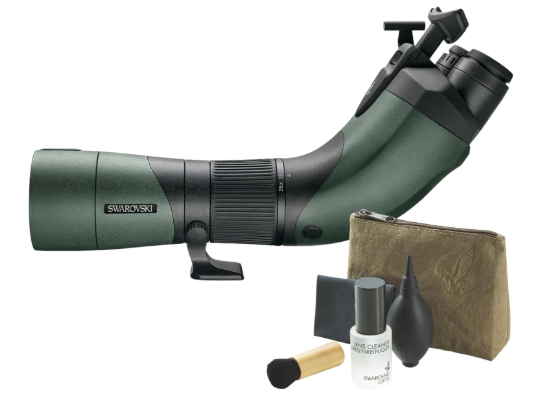
You’re in the right place if you’re looking for the 7 Best Spotting Scopes For Bird Watching. watching becomes much more rewarding when you can examine distant birds without disturbing them.
A good spotting scope brings birds that appear as tiny shapes through binoculars into a much more detailed view, allowing you to study plumage, behavior, markings, and movement from a comfortable distance.
For birders who regularly visit wetlands, forests, grasslands, shorelines, or open country, a spotting scope can become one of the most useful pieces of optical equipment they own.
However, choosing the right model is not simply about buying the scope with the highest magnification. Objective size, optical glass, focusing performance, field of view, portability, weather resistance, eye relief, and tripod compatibility all affect how enjoyable a scope is in the field. Premium models can provide exceptional clarity, while less expensive options can offer impressive performance for casual birders and beginners.
7 Best Spotting Scopes For Bird Watching
1. SWAROVSKI OPTIK ATX Spotting Scope Modular Zoom Eyepiece
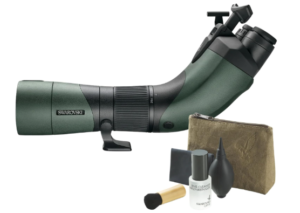
For birders who want premium optical performance and are prepared to make a substantial investment, the SWAROVSKI OPTIK ATX Spotting Scope Modular Zoom Eyepiece is the standout choice in this group.
The biggest attraction is its modular approach. Rather than treating the spotting scope as one fixed optical package, the ATX system allows the viewing and objective components to work together as a flexible platform.
Depending on the configuration, the system can offer different combinations of objective size and magnification. The ATX eyepiece provides 25-60x magnification with the 65mm and 85mm objective configurations, while the 95mm configuration reaches 30-70x.
For serious bird watching, the optical quality is particularly important. Fine feather patterns, subtle color differences, and small identification markings become easier to distinguish when the image remains sharp and high in contrast. The system is also well suited to birders who spend long periods observing from a fixed location or regularly photograph wildlife through their spotting scope.
The ATX is not the obvious choice for someone who simply wants an inexpensive scope for occasional use. It is aimed at enthusiasts who value optical refinement, adaptability, and long-term performance. Independent birding guides continue to place Swarovski’s ATX/STX system among the highest-end spotting scopes for bird observation.
Key Features
- Modular spotting-scope design
- 25-60x magnification with 65mm/85mm configurations
- 30-70x capability with the 95mm configuration
- Premium optical performance
- Excellent choice for serious birding and digiscoping
- Weather-resistant construction
Pros
- Exceptional image quality
- Highly versatile system
- Excellent for detailed observation
- Strong premium construction
Cons
- Requires a quality tripod
2. Kowa TSN-88A PROMINAR Pure Fluorite Angled Spotting Scope

The Kowa TSN-88A PROMINAR Pure Fluorite Angled Spotting Scope is an outstanding choice for anyone who places optical quality above almost everything else.
Its 88mm objective gives the scope a substantial light-gathering advantage, particularly useful when birds are being observed early in the morning, late in the afternoon, or under overcast conditions. The use of pure fluorite optical technology is one of the major reasons this scope attracts serious birders.
The fluorite element helps control chromatic aberration and contributes to excellent color fidelity and contrast. This becomes especially valuable when identifying birds based on subtle differences in plumage. A high-quality image is also important when working at higher magnifications, where optical shortcomings become easier to notice.
The Kowa’s 25-60x zoom configuration provides a useful combination of broad viewing and detailed long-distance observation. Its 88mm objective also gives it considerable capability for watching distant waterfowl, raptors, shorebirds, and other wildlife.
Features
- 88mm objective
- Pure fluorite optical technology
- 25-60x zoom capability with the appropriate eyepiece
- Angled viewing design
- Dual focusing system
- Weather-resistant construction
Pros
- Outstanding color correction
- Excellent contrast
- Large light-gathering objective
- Superb long-distance viewing
Cons
- Larger than compact scopes
3. Celestron Regal M2 80ED Spotting Scope
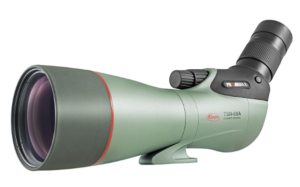
The Celestron Regal M2 80ED Spotting Scope is an attractive middle ground between expensive premium scopes and basic entry-level models.
Its 80mm objective provides a useful balance of light gathering and portability. The ED optical design helps reduce chromatic aberration, which can improve the appearance of fine details and color transitions. Celestron also uses its XLT optical coatings to enhance light transmission and contrast.
For bird watching, this combination is useful when you need enough magnification to examine distant birds without moving into the extreme size and cost of flagship spotting scopes. The scope’s dual-focus arrangement also makes it easier to quickly acquire a subject before making finer focus adjustments.
The Regal M2 has also been highlighted as a strong mid-range spotting scope for bird watching, particularly because of its ED objective and optical coatings.
Features
- 80mm ED objective
- 20-60x magnification configuration
- XLT optical coatings
- Dual focusing system
- Durable construction
- Waterproof design
Pros
- Good optical performance
- Strong mid-range value
- Large 80mm objective
- Useful for birding and wildlife
Cons
- Not as refined as premium fluorite optics
4. Athlon Optics Argos HD 20-60×85 Spotting Scope
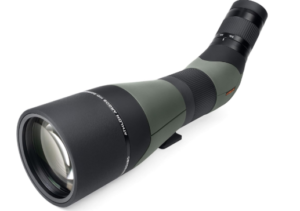
The Athlon Optics Argos HD 20-60×85 Spotting Scope is an appealing choice for birders who want a large objective and substantial magnification at a more accessible price.
Its 85mm objective is particularly useful for distant observation and low-light conditions. With a 20-60x zoom range, you have enough flexibility to locate a bird at lower magnification and then increase magnification when you need to inspect details.
This versatility makes the Argos HD suitable for open-country birding, wetlands, raptor watching, and general wildlife observation. A current 2026 birding comparison also identifies the Argos HD 20-60×85 as a value-focused option, citing its combination of 20-60x magnification, 85mm objective, HD optics, and relatively accessible pricing.
One important point with any large spotting scope is tripod stability. At 60x, even a small amount of movement can make a distant bird difficult to follow, so pairing this scope with a sufficiently stable tripod can make a major difference.
Features
- 20-60x magnification
- 85mm objective
- HD optical system
- Angled viewing design
- Large light-gathering capability
- Suitable for long-distance viewing
Pros
- Large objective
- Wide magnification range
- Good value
- Useful in challenging light
Cons
- Relatively heavy
5. Vortex Diamondback HD Spotting Scope 16-48×65 Angled

The Vortex Diamondback HD Spotting Scope 16-48×65 Angled is a practical option for birders who want a capable scope that is easier to carry than many 80mm-plus models.
The 65mm objective keeps the overall package more manageable, making it appealing to birders who spend a lot of time walking between observation locations. Its 16-48x magnification range is also useful because the lower end provides a wider view for finding birds, while the upper end gives you additional reach for distant subjects.
The HD optical system is designed to provide improved resolution, color fidelity, and sharpness. For general birding, the combination of manageable size and useful magnification makes it a sensible choice.
This type of mid-sized scope is particularly useful when portability matters. A scope that stays at home because it is too large or heavy is less useful than a slightly smaller model that you are comfortable carrying into the field.
Features
- 16-48x magnification
- 65mm objective
- HD optical system
- Angled viewing configuration
- Waterproof and fogproof construction
- Portable design
Pros
- Easier to carry
- Good magnification range
- Strong value
- Suitable for general birding
Cons
- High magnification requires tripod stability
6. Nikon Monarch FIELDSCOPE 60ED-S W/MEP-20-60
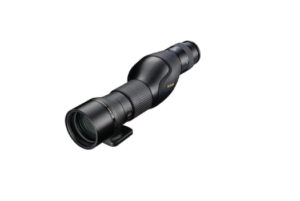
The Nikon Monarch FIELDSCOPE 60ED-S W/MEP-20-60 is particularly attractive to birders who value portability and want a scope that is easier to carry during long walks.
The 60mm-class objective keeps the system more compact than the larger 80mm and 85mm alternatives. This can be a meaningful advantage when birding involves hiking through forests, moving between wetlands, or traveling to different observation sites.
The ED optical design helps control color fringing and maintain a clean image. With the 20-60x eyepiece, the scope can also provide enough magnification for detailed observations of distant birds.
Portability is often underestimated when buying a spotting scope. A very large scope may offer excellent performance from a fixed location, but a smaller scope can be more practical for someone who spends most of the day walking. Nikon’s Monarch Fieldscope line has also been recognized by birding guides as a lightweight option for field observation.
Features
- 60mm-class objective
- ED optical design
- 20-60x eyepiece
- Compact field-oriented design
- Suitable for extended outdoor use
- Nikon optical quality
Pros
- Relatively lightweight
- Easy to transport
- Good optical performance
- Excellent for mobile birders
Cons
- Less light gathering than larger scopes
7. Bushnell Trophy Xtreme 20-60×65 Waterproof Spotting Scope
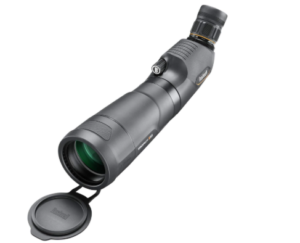
The Bushnell Trophy Xtreme 20-60×65 Waterproof Spotting Scope is aimed at users who want to enter the world of spotting scopes without spending heavily.
Its 20-60x magnification range provides considerable flexibility for the price category. The 65mm objective is also reasonably portable, making the scope useful for backyard wildlife viewing, casual bird watching, outdoor observation, and occasional trips into the field.
It does not compete directly with the Swarovski or Kowa in optical refinement, but that is not necessarily its purpose. It is better viewed as an accessible way for beginners to experience the advantages of a spotting scope.
Current spotting-scope guides continue to position the Trophy Xtreme as a budget-oriented model. However, testing has also found limitations in areas such as edge sharpness, chromatic aberration, and low-light performance, so buyers should keep expectations appropriate for its price class.
Features
- 20-60x magnification
- 65mm objective
- Waterproof construction
- Budget-friendly design
- Suitable for general outdoor viewing
- Compact compared with larger scopes
Pros
- Affordable
- Useful zoom range
- Lightweight
- Good starter option
Cons
- Optical quality trails premium models
Read Also:
What to Consider When Buying the 7 Best Spotting Scopes For Bird Watching
Objective Lens
Objective diameter has a major influence on how much light reaches your eye. Larger objectives such as 80mm, 85mm, and 88mm can be advantageous when birding during early mornings, late afternoons, or cloudy conditions.
However, bigger is not automatically better. A large objective increases size and weight, so mobile birders may prefer a 60mm or 65mm scope.
Magnification
A wide zoom range gives you more flexibility. Lower magnification makes it easier to locate moving birds because the field of view is wider. Higher magnification allows you to inspect distant birds in greater detail.
Optical Glass
The quality of the glass can make a significant difference. ED glass helps reduce chromatic aberration, while premium fluorite designs can provide exceptional color correction and contrast. This is one reason the Kowa and Swarovski sit at the premium end of the list.
Field of View
A wide field of view makes it easier to find birds quickly, especially when they are flying or moving through vegetation. Don’t automatically choose the scope with the highest magnification. A narrower view at extreme magnification can actually make moving subjects more difficult to track.
Weight
Think honestly about how you will use the scope.
If you mostly watch birds from a vehicle, hide, or fixed observation point, a larger 80-88mm scope may make sense.
FAQs of the 7 Best Spotting Scopes For Bird Watching
- Is a spotting scope better than binoculars for bird watching?
They serve different purposes. Binoculars are generally better for quickly scanning an area and following active birds, while spotting scopes provide much higher magnification for identifying distant birds and examining fine details.
- What magnification is best for bird watching?
A range around 20-60x is highly versatile. Lower magnification helps locate birds, while higher magnification can reveal details at longer distances.
- Is an 80mm spotting scope better than a 60mm scope?
Not in every situation. An 80mm scope generally provides greater light-gathering capability, but a 60mm scope can be significantly easier to carry. The better choice depends on whether optical performance or portability is more important to you.
- Is Swarovski worth the money for bird watching?
For serious birders who frequently use their spotting scope and want exceptional optical performance, the Swarovski ATX can justify its premium position. For casual birding, a less expensive model can provide much better value.
Conclusion
The 7 Best Spotting Scopes For Bird Watching for bird watching depends on how seriously you pursue the hobby, how far you normally observe birds, and how much equipment you are willing to carry. Whatever model you choose, pairing it with a stable tripod and learning how to use lower magnification to locate birds before zooming in will make a noticeable difference in the field.